
Case study · Manufacturing · Electronics
Electronics manufacturer saves $33,792 a year with Model C2.
Hand-carrying circuit boards between workstations kept interrupting skilled assembly work. Model C2 took over the runs, paid for itself in under six months, and keeps component flow steady.
- $33,792annual recurring savings
- 128 hrslabor saved per month
- 20%productivity gained
- 5.7 monthsto full ROI
Overview
Small components, constant trips
In electronics manufacturing, manual transport of thousands of small components creates significant operational inefficiencies. As an industry average, assembly staff spend around 11% of their time on material movement, and each interruption takes 15–23 minutes to recover from.
With narrow aisles and delicate components throughout, management sought cost-effective delivery automation that could be implemented quickly and demonstrate immediate value without complex integration.
The challenge
Hand-carried boards interrupted skilled work
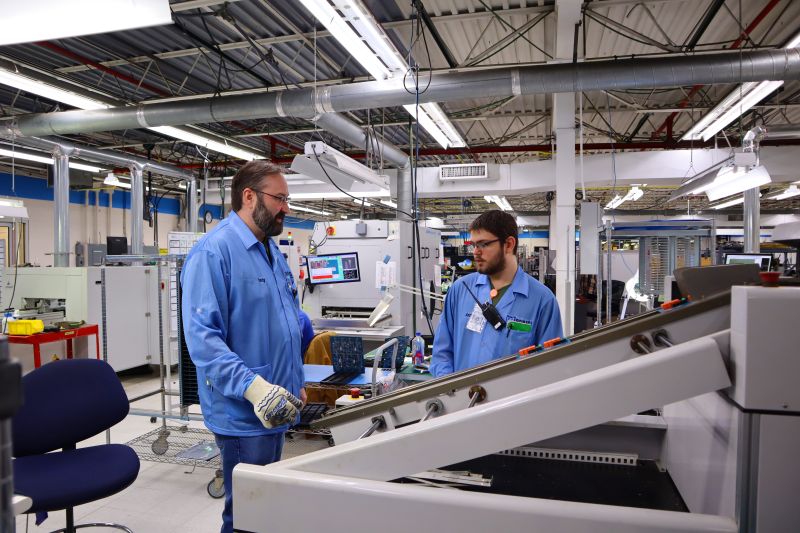
The facility’s circuit board production involved precise placement and soldering across multiple workstations. With stations spaced 90–150 ft apart, detailed soldering work was frequently interrupted by the need to hand-carry in-process boards to the next phase. This created cascading inefficiencies:
Workflow disruption
Round trips of up to 300 ft left workstations idle multiple times per shift, creating downtime and production bottlenecks.
Production inefficiency
Each delivery took an average of 14 minutes away from skilled assembly work, plus time to regain focus afterward.
Quality concerns
Frequent transport increased the risk of damage, while constant task switching introduced errors.
The solution
Ready to work on arrival
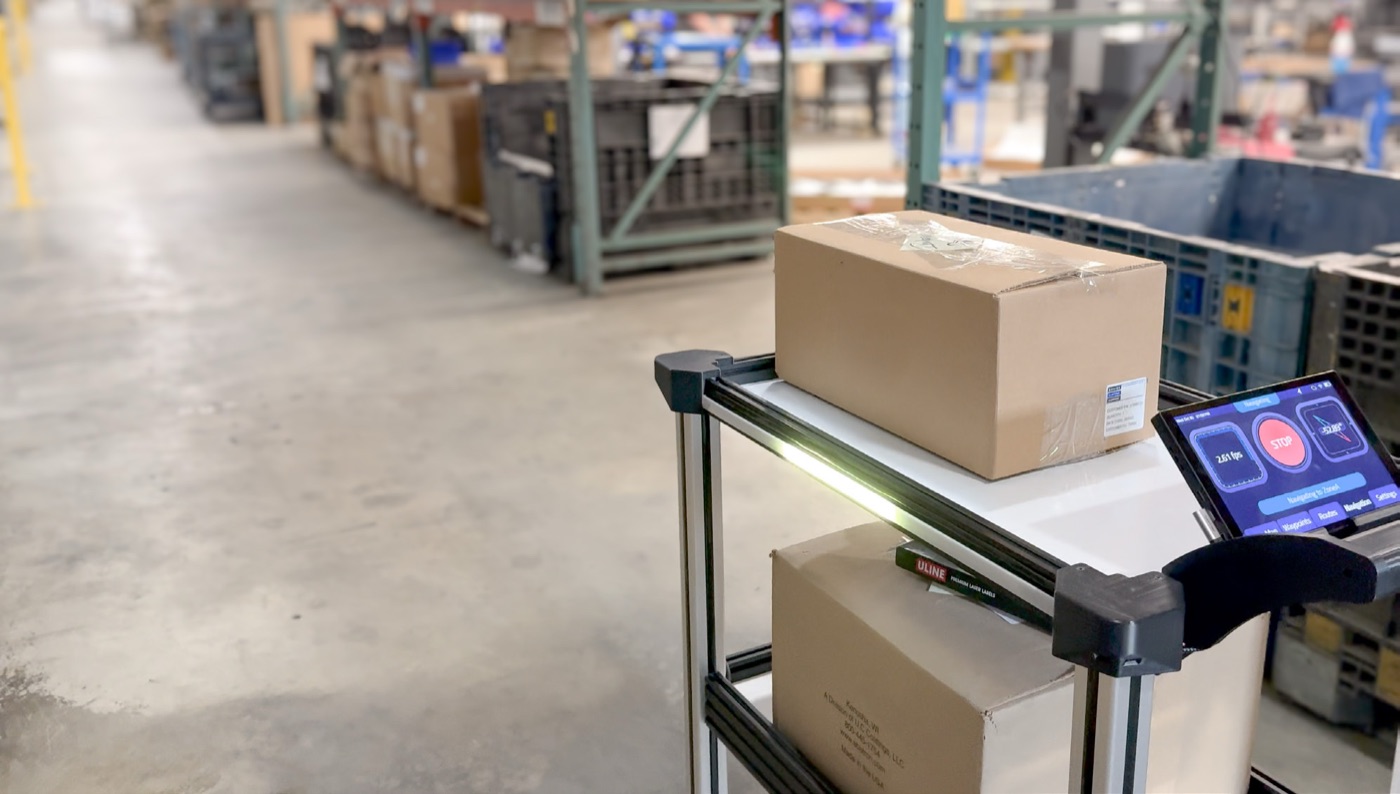
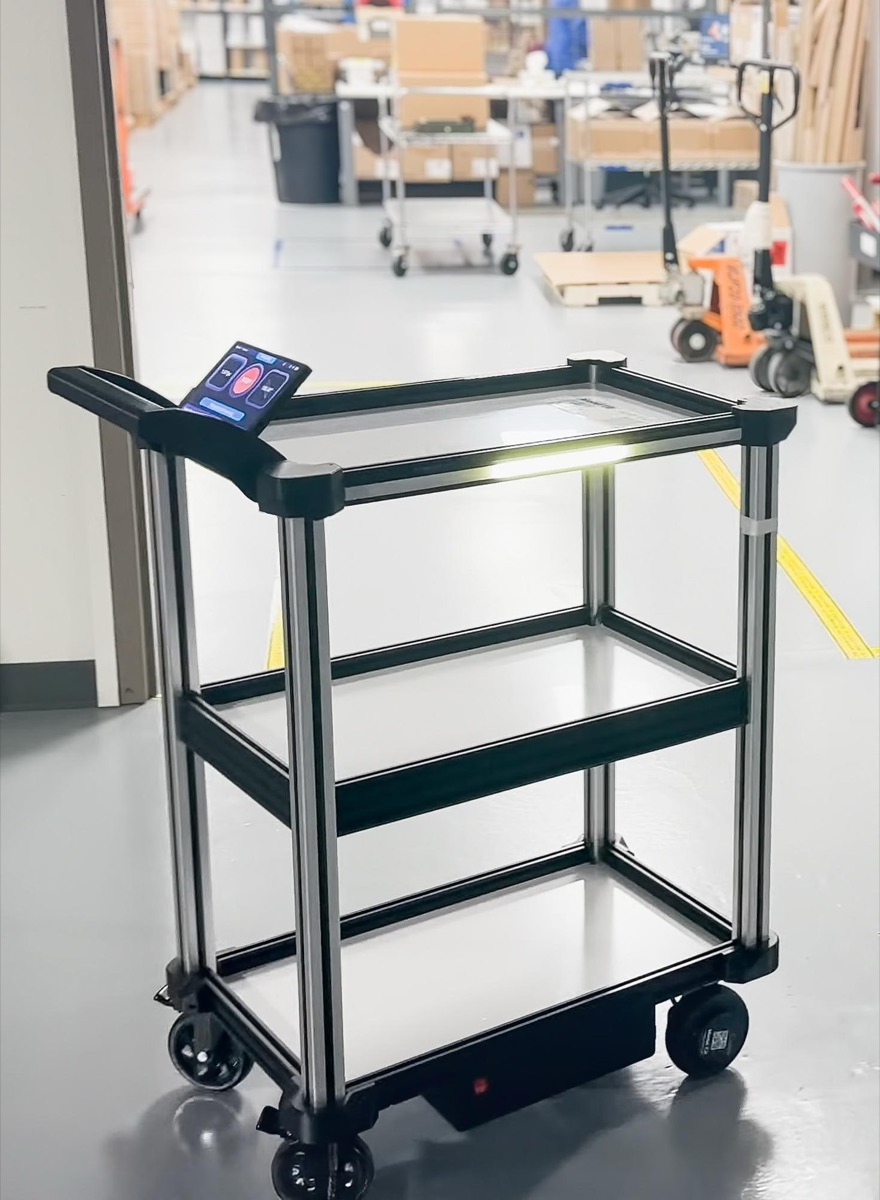
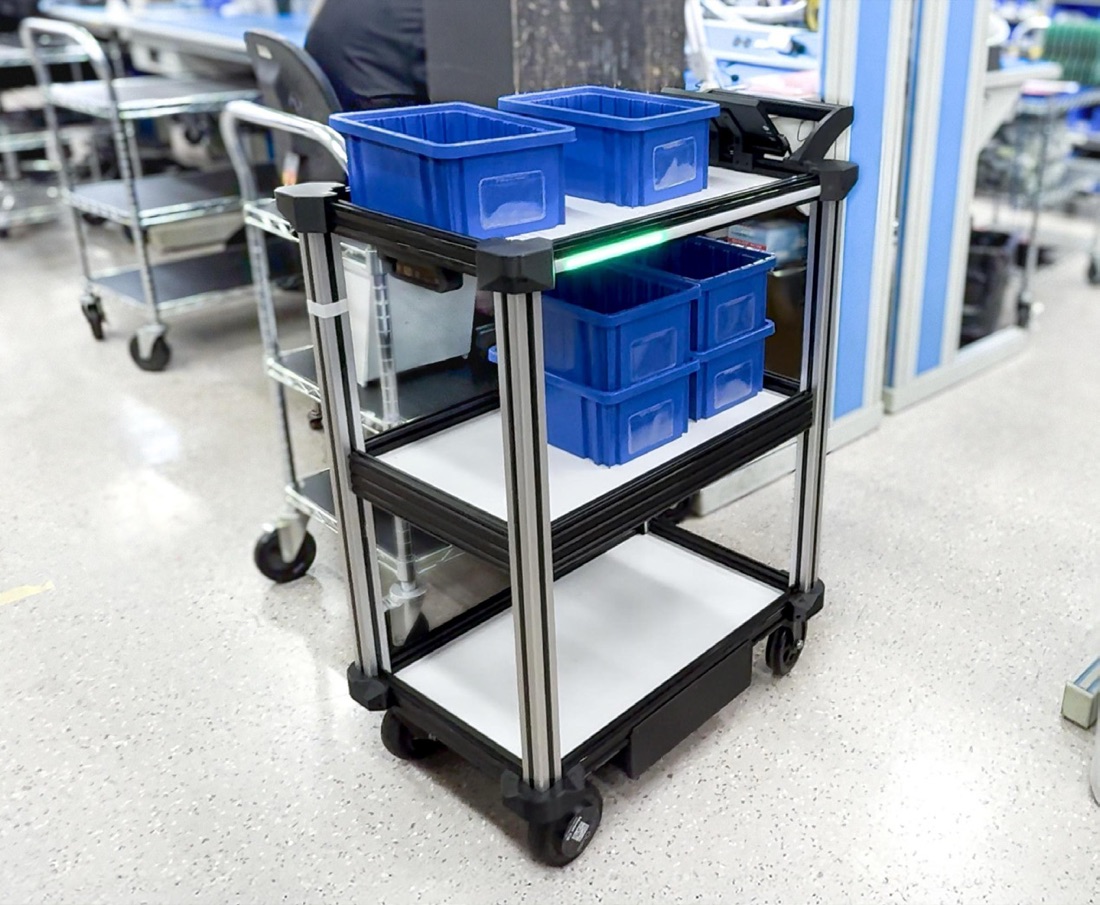
Model C2 provided immediate automation without setup or assembly hurdles. The robot arrived ready for use, and the team deployed it themselves in two steps.
During navigation, operators noted Model C2’s ability to weave safely through the facility’s 4 ft pathways and respond in milliseconds to people, forklifts, and stacks of boxes alike. Precise positioning meant each programmed stop was repeated exactly, with the cart arriving parallel to the workstation every time.
Self-deployment in two steps
- Facility mappingThe cart was guided around its operating area while its sensors built the map in real time on the touchscreen.
- Waypoint designationDelivery stops were programmed, and adjusted, with a simple touch at each location.
The results
Full ROI in 5.7 months
Adding Model C2 reshaped daily operations and returned the full investment in less than half a year.
The facility has set a new standard of efficiency: automated delivery keeps components flowing while skilled technicians stay focused on value-added work. Those improvements turned into substantial recurring savings, and the cart keeps adapting as production demands change.
- $33,792annual recurring savings
- 128 hrsmonthly labor savings
- 20%productivity gained
More case studies
See Model C2 in other facilities
-
Manufacturing · High-reliability electronics
Emerald Technologies expands material handling capacity with Model C2.
Two Model C2 carts return wave solder pallets and deliver SMT reels, so one material handler now supports five lines.
Read the case study -
Life science · Clinical diagnostics
Life science lab reclaims 1,090 hours a year with Model C2.
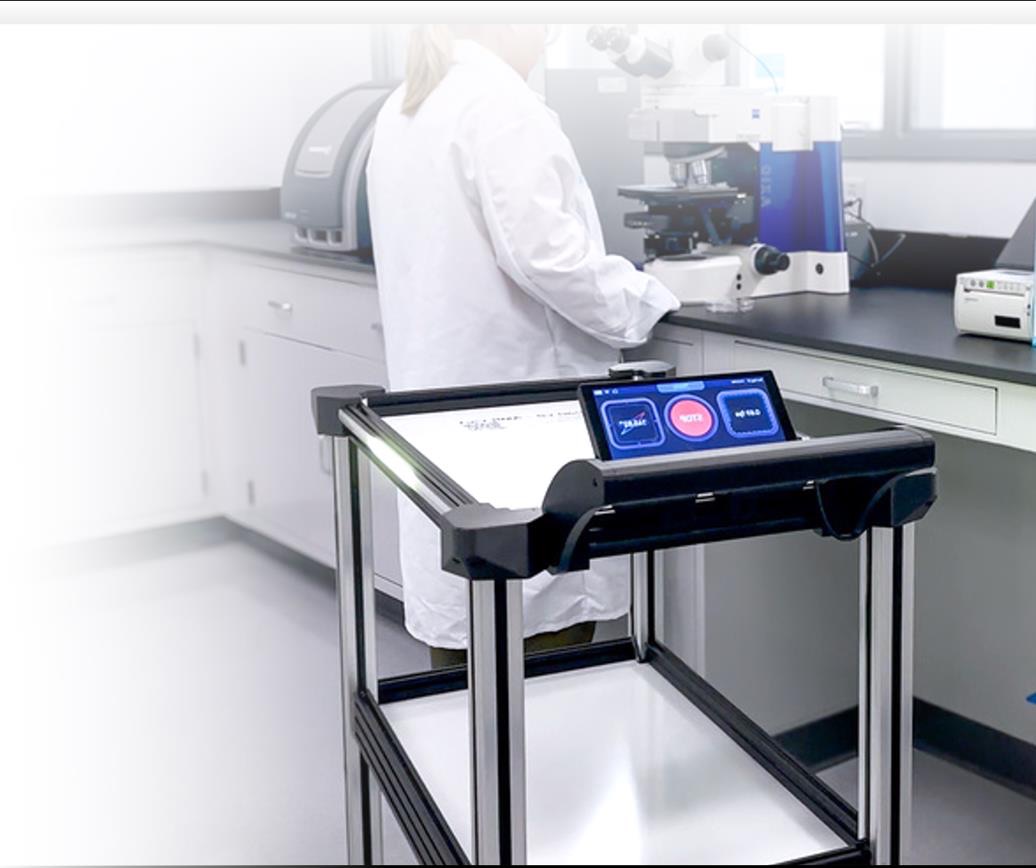
Two Model C2 Large carts carry specimen racks from central sort to more than a dozen departments, around the clock.
Read the case study
Ready to see similar results?
Tell us what you move and where. We’ll show you how Model C2 fits, in a short demo.