
Case study · Manufacturing · High-reliability electronics
Emerald Technologies expands material handling capacity with Model C2.
Automated pallet returns and SMT material delivery help a Michigan electronics manufacturer improve production flow and put employee time to better use.
- 5SMT lines per material handler, up from two
- 500+miles traveled by two carts in the facility
- 2Model C2 carts, purchased October 2024
- A few monthsreported payback
The customer
High-reliability electronics, built in Michigan
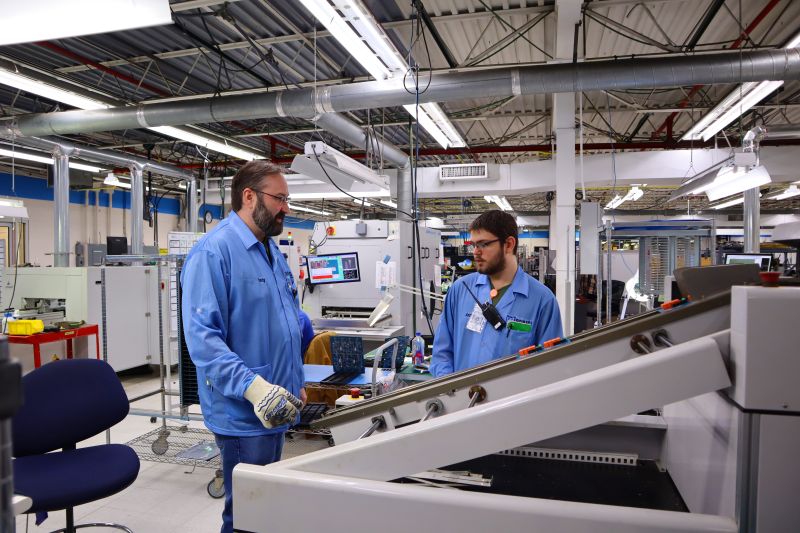
Emerald Technologies’ Saline Division in Saline, Michigan, manufactures high-reliability electronics for aerospace and defense, medical, industrial, and communications customers. Its operations include surface-mount technology (SMT), through-hole assembly, wave soldering, testing, and system-level integration.
The division has invested steadily in automation, from inline optical inspection to intelligent material storage and equipment for repetitive production tasks.
The challenge
Walking materials between processes
Even with automated production equipment, moving materials between processes consumed employee time. Wave solder operators manually carried pallets from the end of the line back to the beginning. In SMT production, material handlers moved component reels from automated storage towers to individual production lines.
Emerald wanted to reduce this non-value-added movement without installing fixed conveyors or making major changes to the factory layout. Any solution also needed to work around people and equipment in an active manufacturing environment.
The solution
A live demo on the factory floor
Horizon Sales, a partner Emerald has worked with for about 20 years, demonstrated Model C2 directly on Emerald’s factory floor. The live demonstration showed how the autonomous cart could navigate the existing layout and perform the required transport tasks. Emerald purchased two carts in October 2024.
Horizon Sales assisted with deployment by mapping the production floor, verifying routes, and integrating the carts with Quasi’s monitoring software. Operators dispatch a cart with a button, while configurable routes and destinations support specific production workflows. Real-time obstacle avoidance lets the carts move dynamically through the facility, with no magnetic tape or fixed guide paths.
The software also reports real-time operating information and calculates return on investment automatically, which matters at Emerald, where the engineering team validates new equipment with post-installation data.
Application one
Wave solder pallet returns
The first cart returns pallets from the end of the wave solder line to the beginning. It does the job of a pallet return conveyor, at a lower reported cost and without a fixed installation.
Automating the return trip lets operators stay at their stations and concentrate on production. Emerald reported higher wave solder throughput and shorter run times as walking and interruptions decreased.
These carts have significantly increased our throughput by allowing the operators to remain seated as opposed to constantly getting up to walk pallets back to the front of the line.
Application two
SMT material delivery
The second application connects automated component storage with SMT production. Storage towers stage and eject the reels needed for upcoming work. A material handler places each reel on a Model C2, which delivers it to the right SMT line for splicing before the pick-and-place equipment runs out of material.
Before deployment, Emerald needed one material handler for every two SMT lines. With automated delivery, one material handler supports five, so the company could reassign employees to other work without interrupting production.
- 2 → 5SMT lines per material handler
- 2.5×as many lines per handler
The results
More capacity from the same floor
- Greater material handling capacity: one handler supports five SMT lines instead of two.
- Improved wave solder flow: automated pallet returns reduce operator walking and interruptions, with increased throughput reported by Emerald.
- Sustained use: the two carts had traveled more than 500 combined miles within the facility by September 2026.
- Fast reported payback: Paul Brown described the return on investment as a few months.
- Simple day-to-day operation: Emerald reported positive shop-floor acceptance, with straightforward controls limiting training needs.
Emerald’s deployment shows how targeted material transport can extend the value of existing production equipment. By automating recurring trips between workstations, Model C2 helps employees spend more time on production and gives manufacturers room to increase output within their existing facilities.
Adapted from “Emerald Technologies Advances Lean Manufacturing with C2 Smart Carts” by Rachel Marino, Operations Manager, Horizon Sales, U.S. Tech, September 2026, pages 22–23. Results describe Emerald’s deployment. The 2.5× figure is calculated from the reported change from two to five SMT lines per material handler; it is not a measured labor-cost reduction.
More case studies
See Model C2 in other facilities
-
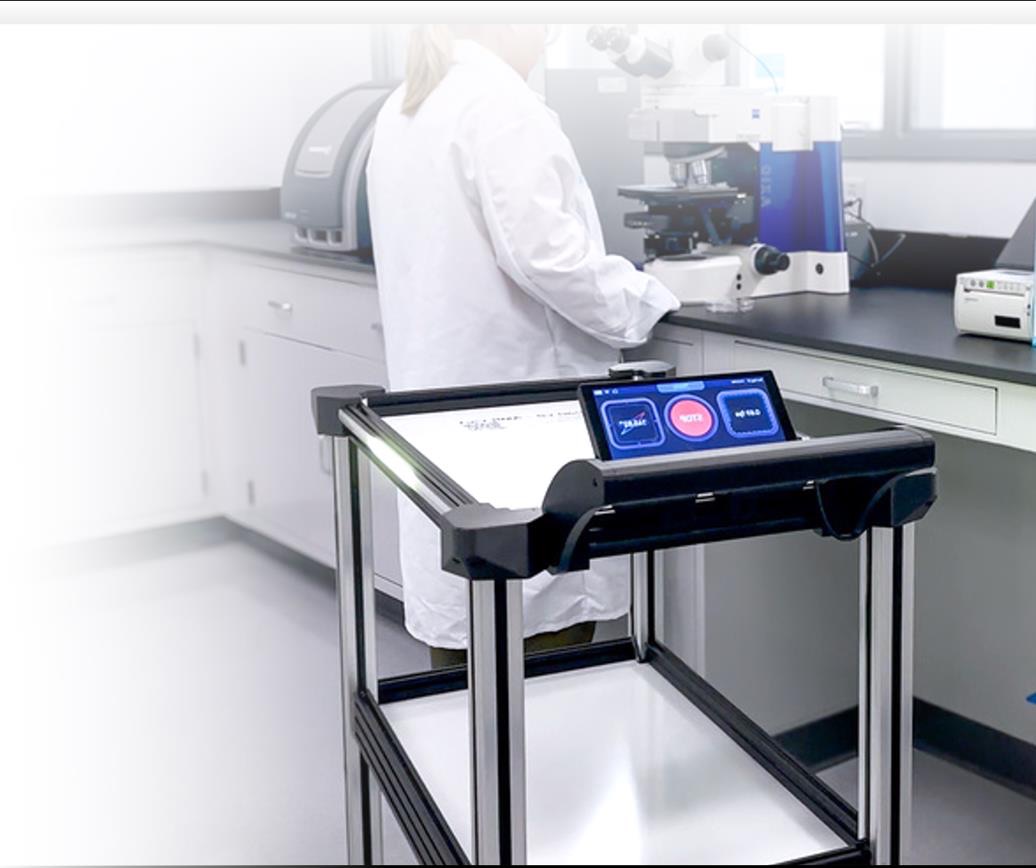
Life science · Clinical diagnostics
Life science lab reclaims 1,090 hours a year with Model C2.
Two Model C2 Large carts carry specimen racks from central sort to more than a dozen departments, around the clock.
Read the case study -
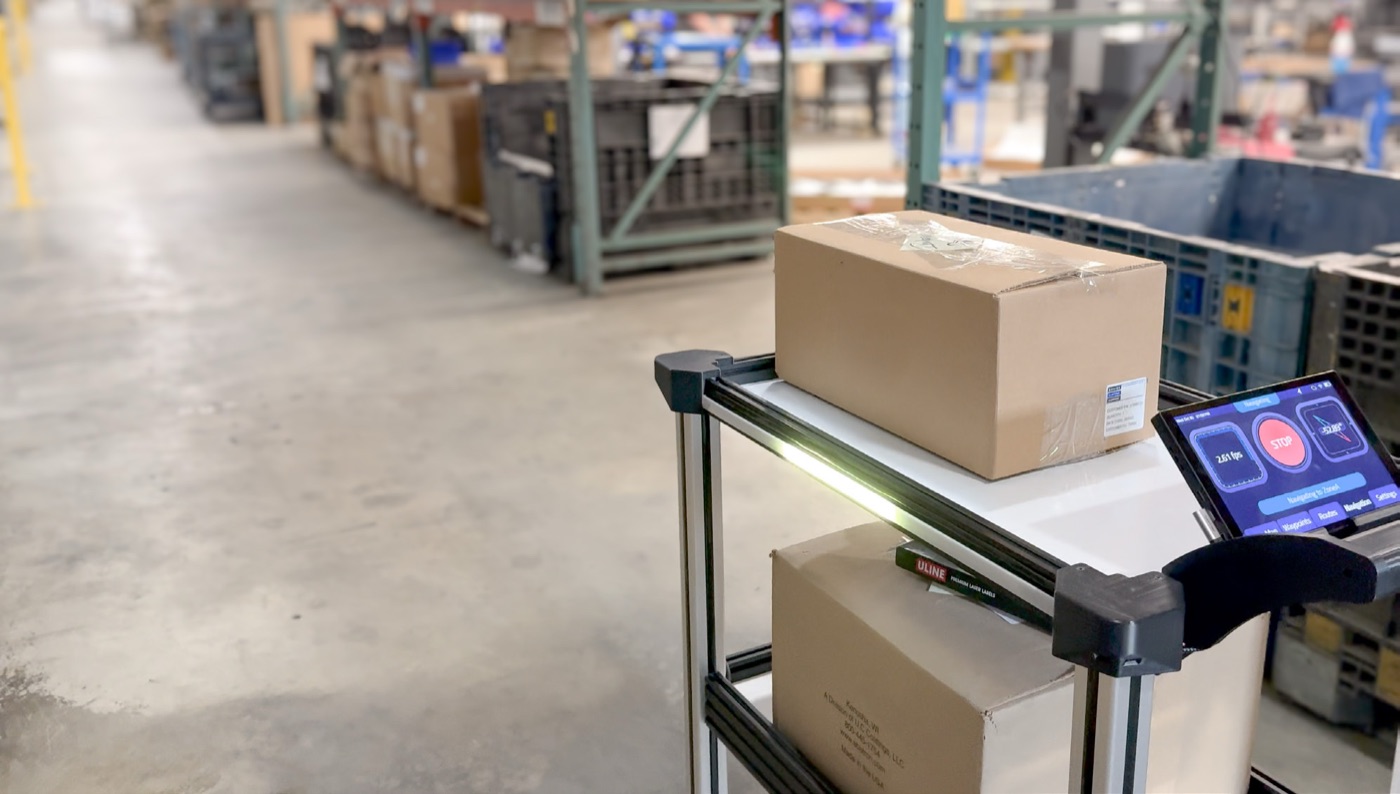
Manufacturing · Electronics
Electronics manufacturer saves $33,792 a year with Model C2.
A circuit board facility automated the trips between workstations and reached full ROI in 5.7 months.
Read the case study
Ready to see similar results?
Tell us what you move and where. We’ll show you how Model C2 fits, in a short demo.