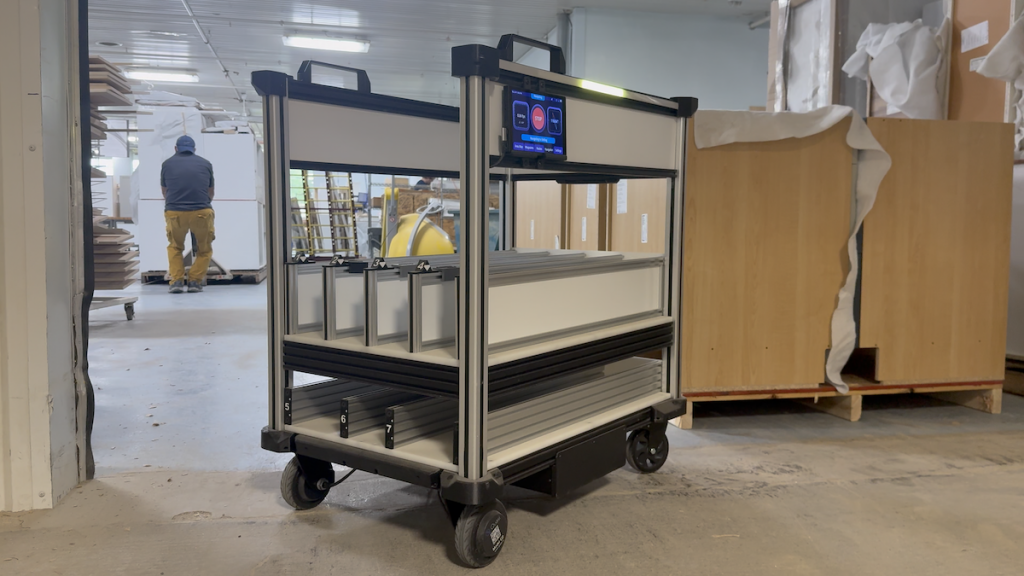
The Model C2 AMR Autonomous Mobile Robotic Cart represents the culmination of years of design, testing, and innovation at Quasi Robotics. Built for intelligent mobility in structured indoor environments, it combines advanced LiDAR, time of flight, and machine vision systems to navigate safely and autonomously across hospitals, laboratories, and industrial facilities.
However, as with any precision-engineered system, optimal performance depends on operating within defined parameters. The Model C2 limitations of use are not weaknesses. They are boundaries that ensure reliability, safety, and compliance. Understanding these limitations helps operators deploy the robot correctly, avoid performance issues, and support long-term operational stability.
This guide breaks down the key limitations and how to manage them effectively.
1. Transparent and Reflective Surfaces
The Challenge of Glass Walls
Glass walls, doors, and partitions can create major navigation issues for AMRs. LiDAR and depth sensors interpret reflected light to build a three-dimensional map, but glass either allows the light to pass through or scatters it unpredictably. This can create phantom reflections, false positives, or missing data.
What this means for the robot:
- It may not detect a glass wall or door at all
- It may misjudge distances near shiny or mirrored surfaces
- It may interpret reflections as obstacles and stop unnecessarily
Best practices:
- Add visible decals or markings at the height of the C2 sensors
- Use framed partitions whenever possible
- Mark glass areas as no-go zones in Cloud Connect
- Conduct site-specific risk assessments
These simple adjustments make environments with difficult transparency far more AMR-friendly.
2. Thin or Narrow Objects
When There Is Not Enough to See
Objects with very small surface areas at LiDAR height, such as thin poles or narrow furniture legs, may not return enough sensor data to be detected reliably.
Examples include:
- Slender metal table legs
- Single pillar desks
- Shelving supported by thin vertical rods
The safest solution is to mark these areas as no-go zones in Cloud Connect. During site mapping, operators should note unusual furniture or structural elements that could cause detection gaps.
3. Floors and Surface Quality
The Foundation of Reliable Mobility
The floor beneath the Model C2 is one of the most important factors affecting navigation performance. The robot performs best on smooth, solid, even surfaces such as:
- Level concrete
- Office-style short-pile carpet
- Linoleum or matte flooring
Surfaces that create problems:
- Wet or oily floors
- Highly glossy surfaces that create sensor reflections
- Cracked or uneven flooring
Transitions between surfaces should be smooth and kept below 10 millimeters in height. The C2 handles slopes up to ten degrees when unloaded, but traction decreases as the payload increases.
A clean, dry, stable floor equals better traction and more accurate sensor readings.
4. Environmental Constraints
Indoor Precision, Not Outdoor Endurance
The Model C2 is designed exclusively for indoor use. It should not be exposed to water, dust, or outdoor conditions, nor should it operate on unstable platforms such as ships or moving vehicles.
Recommended environmental range:
- Temperature: five C to fifty C (forty-one F to one hundred twenty-two F)
- Humidity: zero to eighty-five percent (non-condensing)
Extreme temperatures or sudden environmental changes can affect sensors, electronics, and calibration.
5. Operational Space and Clearance Requirements
While highly maneuverable, the C2 still needs room to operate safely. A minimum of three feet of clearance on each side ensures smooth navigation and turning.
Additional considerations:
- Objects smaller than forty millimeters may not be detected
- Reflective materials can distort sensor readings
- The robot must never transport people or tow equipment
Clear space supports both safety and performance.
6. Load and Handling Limit
Protecting Stability and Balance
The Model C2 is engineered for load stability within strict guidelines:
- Maximum autonomous payload: seventy-five kilograms
- Manual push payload: one hundred kilograms
- Maximum load per shelf: twenty-five kilograms
Only non-liquid, non-hazardous materials should be transported. Manual pushing should stay below one point three meters per second to prevent tipping or mechanical strain.
7. Sensor Cleanliness and Routine Maintenance
The C2 performance depends on what its sensors can see. Dust, fingerprints, and debris can degrade accuracy and cause false readings.
Maintenance best practices:
- Clean sensors with compressed air or lint-free cloths
- Avoid stickers or covers near sensors
- Check alignment after transportation or bumps
Clean sensors produce clean data, ensuring the most reliable navigation.
8. Human and Safety Considerations
The Model C2 AMR is designed to operate around people, but safe behavior is essential. Pedestrians should maintain one to two feet of distance while the robot is moving and should yield when passing in narrow areas.
Only trained personnel should configure or supervise robot operations. A site-specific risk assessment is strongly encouraged before deployment to ensure the environment supports safe autonomous navigation.
Embracing Limitations as a Strength
Every piece of advanced technology has boundaries. For the Model C2 AMR, these boundaries define reliability. They ensure the robot operates with precision, consistency, and safety.
By respecting these parameters and following best practices such as clean sensors, stable floors, marked glass surfaces, and safe payloads, facilities can unlock maximum uptime and long-term performance.
Understanding the Model C2 limitations is not just about compliance. It is about building a strong partnership between human operators and autonomous technology. When both work together within clearly defined boundaries, the results are exceptional.
Our Website: https://www.quasi.ai/
Find Us on LinkedIn: https://www.linkedin.com/company/quasi-robotics/