Most transport AMRs (autonomous mobile robots) cost about $25,000 to $80,000 per robot to buy, and robot subscriptions (Robots-as-a-Service, or RaaS) often run about $1,000 to $4,000 per robot per month. Our Model C2 carts start under $15,000.
But the price on the quote is rarely what an AMR project ends up costing. Deployment, facility changes, software licenses, and support can add 30 to 50 percent or more, and they’re the reason two carts with similar prices can end up thousands of dollars apart over five years.
Below, we break down every cost to look for before you sign, how buying compares with subscribing, and a quick way to check whether a robot will pay for itself in your facility.
What Drives the Price of the Robot Itself
Most of the difference between one AMR cart and another comes down to five things.
- Payload: A compact cart that carries specimens or small parts costs less than a heavy-duty cart built to move 500 lb of castings. Bigger motors, stronger frames, and heavier batteries all add to the price.
- Navigation and safety sensors: LiDAR, 3D cameras, and Time-of-Flight sensors let a cart see people, carts, and overhanging shelves and steer around them. More sensors mean safer travel in busy aisles, and a higher bill of materials.
- Software: Some vendors include navigation, mapping, and updates with the robot. Others sell fleet software, analytics, or integrations as separate licenses.
- Battery and charging: Run time per charge, battery swapping, and automatic docking and charging all affect both the price and how much staff time the robot needs.
- Certifications: Robots certified for markets such as the EU and UK go through additional safety testing, which is built into their price.
The Costs That Don’t Show Up in the Robot’s Price
The robot is often not the most expensive part of an automation project. Industry guides commonly estimate that integration and infrastructure add 30 to 50 percent on top of the hardware, and that maintenance runs 8 to 12 percent of the purchase price per year for robots you own. These are the line items to look for.
- Deployment and mapping: Some AMRs need a vendor engineer on site for days or weeks to map the facility and program routes. Others can be set up by your own team.
- Facility changes: Floor tape, magnetic strips, reflectors, or QR codes have to be installed and maintained, and redone every time a layout changes.
- IT infrastructure: Central servers, network upgrades, and Wi-Fi coverage for fleet software can add cost and weeks to the schedule.
- Integration: Connecting robots to automatic doors, elevators, or a warehouse or manufacturing system (WMS or MES) is usually quoted separately.
- Software licenses: Fleet management, analytics, and remote monitoring may carry annual fees per robot.
- Training: Operators, supervisors, and maintenance staff all need some level of training, especially with more complex systems.
- Maintenance and wear parts: Batteries, wheels, and sensors wear out. Ask what they cost and how long they last, because these costs tend to show up in year three, not year one.
- Changes after go-live: If routes change, who reprograms the robot, how long does it take, and is it billed?
Our post on AMR vendor questions to ask before you buy has a full checklist for uncovering these costs before you sign.
Buy or Subscribe: How the Two Pricing Models Compare
Most AMR vendors offer two ways to pay: an outright purchase or a subscription. Neither is cheaper in every case. The right choice depends on how your company budgets and how certain you are about the use case.
Buying the robot
- A one-time capital purchase, and the robot is yours from day one.
- Usually the lowest total cost over several years if the robot stays busy.
- You pay for repairs and parts once the warranty ends, and budget for battery replacements.
- Requires capital approval, which can take months at larger companies.
Subscribing (Robots-as-a-Service)
- A fixed monthly fee with no upfront capital expense, so it can often be approved from an operating budget.
- Repairs, parts, software updates, and support are typically included.
- Easier to start with a short pilot and scale up or down as demand changes.
- Over many years, the total paid is usually higher than buying.
Many facilities start with a subscription to prove the robot in their own environment, then decide whether to keep subscribing or move to ownership.
How to Estimate the Total Cost of Ownership
To compare quotes fairly, estimate the full cost over three to five years rather than comparing robot prices. For each vendor, add up:
- The robot price, or the monthly subscription multiplied by the number of months.
- One-time deployment, mapping, and facility changes.
- Integration with doors, elevators, or other systems, if you need it.
- Annual software licenses and support plans.
- Maintenance, battery replacements, and wear parts over the period.
- The cost of your own staff’s time for setup, training, and route changes.
A robot with a higher price but no infrastructure, no separate licenses, and setup your team can do itself can easily cost less over five years than a cheaper robot that needs all of them.
What It Costs Not to Automate
The other side of the equation is what manual transport costs you today. In most facilities, supply runs aren’t done by dedicated material handlers. They’re done by skilled people, such as technicians, nurses, and machine operators, who stop their work to push a cart.
Here is a simple example. If three employees each spend one hour per shift moving materials, across two shifts and 250 operating days a year, that’s 1,500 hours a year. At a fully loaded labor cost of $35 an hour, that one transport loop costs about $52,500 a year. A robot that takes over that loop for around $20,000 would pay for itself in under five months, before counting the value of the skilled work those hours go back to.
Your numbers will be different, and that’s the point: the payback depends far more on the work the robot takes over than on its price. Our ROI calculator runs this math for your own operation and emails you a payback report. For a deeper look at building the case, see how to build a business case for an AMR that finance will actually approve.
How Model C2 Keeps the Total Cost Down
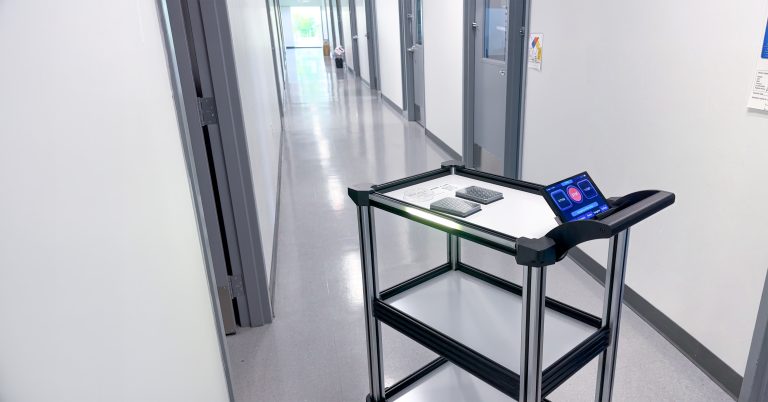
We designed Model C2 to keep the costs around the robot as low as the robot itself. Model C2 carts start under $15,000, a fraction of the typical range for a transport AMR, and the free Model C2 catalog lists starting prices for all five models.
- Setup in under an hour, by your own team: Guide the cart around your facility to map it, label waypoints with a tap, and start delivering. Free remote help is available, and on-site deployment services are optional. See how setup works.
- No infrastructure changes: No tape, floor markers, reflectors, or servers. When your layout changes, your team updates the map on the touchscreen.
- Software included: The same Quasi AI navigation software runs on every model, with no separate per-robot navigation license.
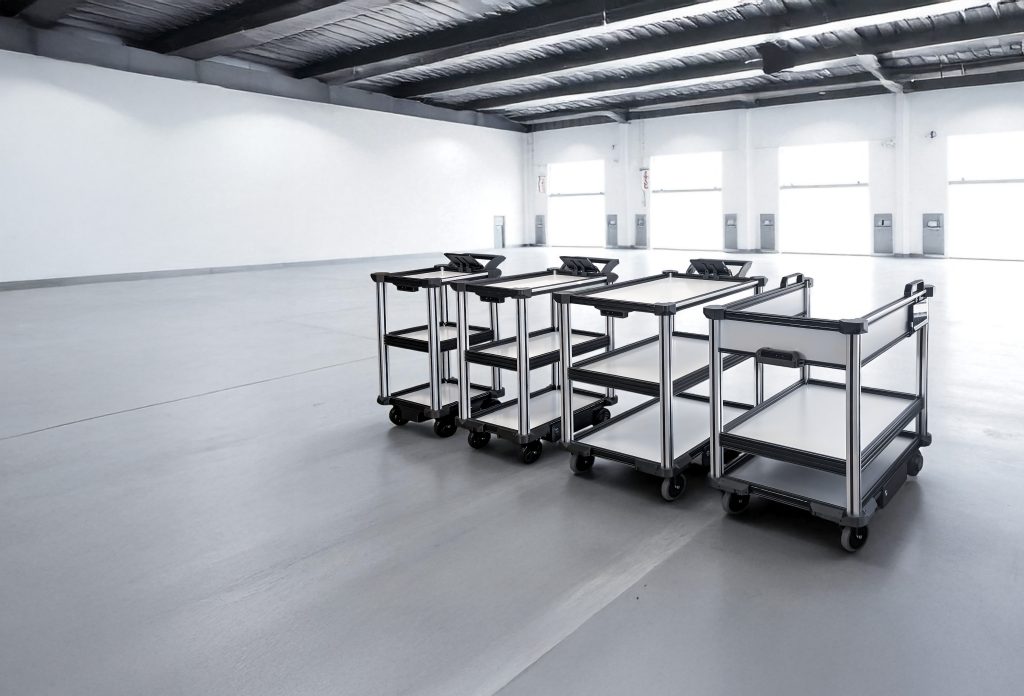
- Five models, one platform: From the compact Mini to the 500 lb Heavy, so you pay for the payload you need. Compare all five models.
- Parts you can order online: Replacement batteries, wheels, sensors, and touchscreens are available from our store, and every robot comes with a 12-month limited hardware warranty.
- Buy or subscribe: Purchase outright, or subscribe with parts, repairs, updates, training, and support included. You can start with a shorter pilot and move to ownership later. See both options.
Our customers see an average payback of about six months.
Get a Real Number for Your Facility
Price ranges are a useful starting point, but the only number that matters is the one for your facility, your routes, and your loads. Every Model C2 quote is built around the models and fleet size you need, for purchase or subscription.
Request a quote or estimate your ROI in a couple of minutes.