Efficiency in Modern Manufacturing
In modern manufacturing, efficiency isn’t just a competitive advantage; it’s the backbone of profitability. Labor costs continue to rise, production schedules tighten, and every wasted minute translates into lost revenue. That’s where Autonomous Mobile Robots (AMRs) like the Quasi Robotics Model C2 redefine how factories think about material movement and workforce productivity. Look towards ROI calculation today.
At Quasi Robotics, we designed the Model C2 Autonomous Mobile Robotic Cart to automate one of the most repetitive yet essential aspects of industrial operations: internal material transport. Whether it’s moving components between workstations, shuttling parts from storage to assembly, or delivering finished goods to packaging lines, transport consumes valuable labor hours every day. By automating these movements, the Model C2 doesn’t just save time; it directly impacts the bottom line. Let’s explore how the C2 generates measurable Return on Investment (ROI) and how quickly it pays for itself in real-world manufacturing environments.
The Hidden Cost of Manual Transport
In most factories, a surprising portion of labor time is spent walking rather than working. Transporting tools, bins, parts, and subassemblies can consume two to four hours per worker per day, time that adds up to thousands of lost hours annually.
Consider what this means in numbers:
-
- Walking distance: 5 to 10 miles per shift for material handlers
- Repetition: Dozens of small transport tasks daily
- Cost: Each nonproductive hour costs $20 to $40 in labor, depending on region and skill level
Multiply that across multiple employees and shifts, and it’s clear that manual transport is a hidden drain on productivity. The Model C2 AMR removes this bottleneck by autonomously handling internal logistics, allowing skilled workers to focus on the tasks that matter most: production, inspection, and quality assurance.
Model C2: Designed for Real World Manufacturing
The Model C2 Autonomous Mobile Robotic Cart was engineered for industrial performance and reliability. Designed to operate in complex indoor spaces, it navigates safely through busy manufacturing floors, narrow aisles, and dynamically changing environments.
Key capabilities include:
-
- 75 kg (165 lbs) payload capacity in autonomous mode
- Smart route optimization for adaptive, efficient travel
- Flexible route programming with multiple waypoint stops
- Configurable actions at each waypoint (load, unload, wait, notify, or continue)
- Continuous route looping that replaces costly rail systems, vacuum tubes, or belt conveyors
These flexible routes allow the Model C2 to act as a mobile conveyor system, continuously transporting materials between work cells or departments. Automating repetitive transfers eliminates the need for fixed infrastructure, offering scalability, adaptability, and a much lower cost of ownership.
The ROI Equation: Turning Hours into Savings
ROI for AMRs is straightforward: reclaim labor hours and reduce non-value-added tasks. The Model C2 delivers measurable savings from the first day of deployment. Let’s look at a few practical ROI scenarios based on real-world usage. Each example assumes 250 workdays per year and standard labor rates.
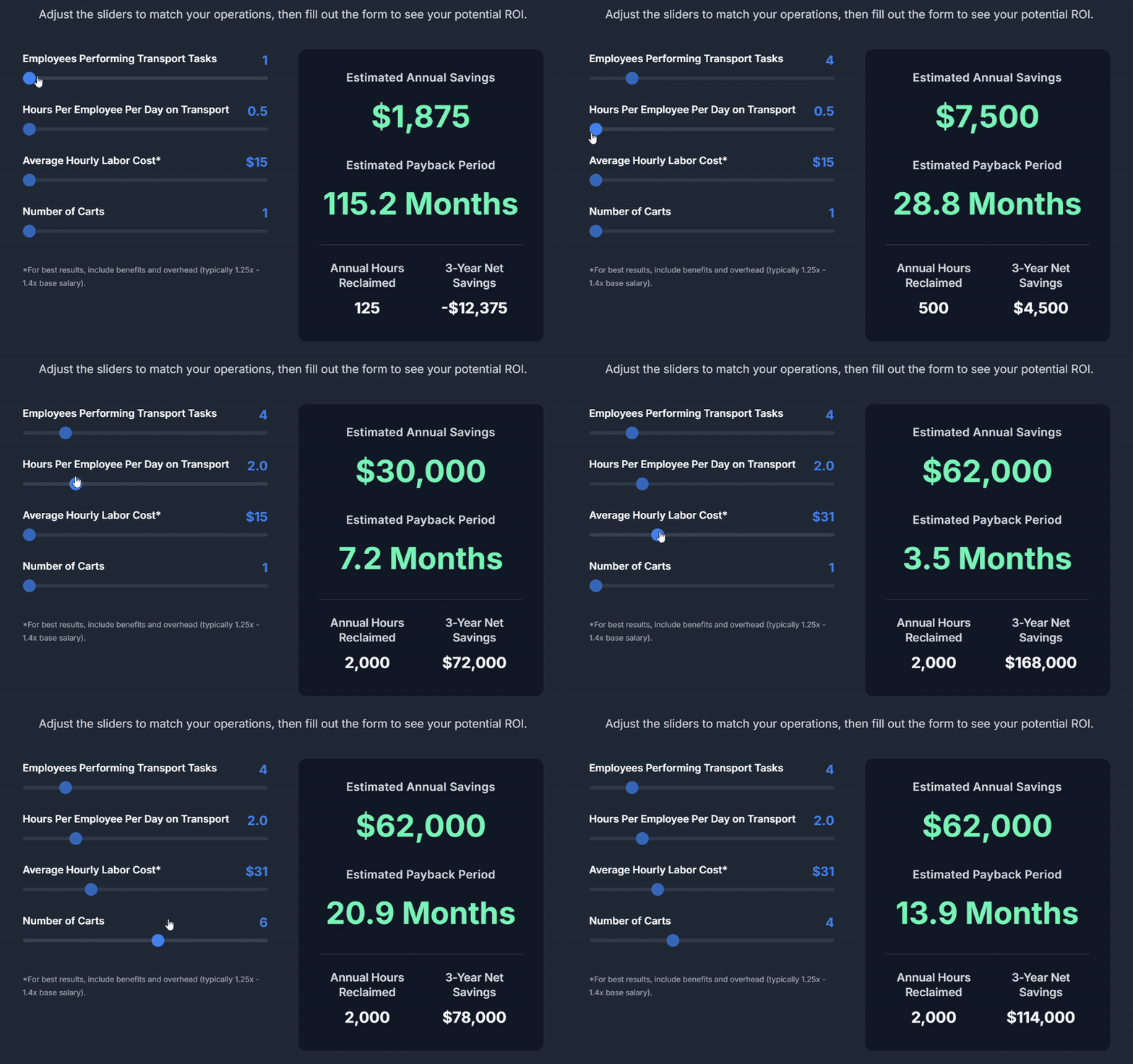
Example 1: Two Employees, Three Hours of Transport per Day
Annual Savings: $37,500
Annual Hours Reclaimed: 1,500
Payback Period: 5.8 months
Three-Year Net Savings: $94,500
A single Model C2 replaces six total labor hours per day, recouping its investment in under six months and freeing skilled workers for more productive tasks.
Example 2: One Employee, Three Hours of Transport per Day
Annual Savings: $15,000
Annual Hours Reclaimed: 750
Payback Period: 14.4 months
Three-Year Net Savings: $27,000
Even smaller facilities benefit. One C2 operating on a fixed loop saves nearly 800 labor hours per year, keeping production lines consistent without interruption.
Example 3: Three Employees, One and a Half Hours of Transport per Day
Annual Savings: $39,375
Annual Hours Reclaimed: 1,125
Payback Period: 11 months
Three-Year Net Savings: $82,125
For multiline or cell-based manufacturing, two C2 carts can automate part transfers between lines. ROI is achieved in less than a year while reducing physical strain and standardizing delivery timing.
Example 4: Three Employees, Four Hours of Transport per Day
Annual Savings: $90,000
Annual Hours Reclaimed: 3,000
Payback Period: 7.2 months
Three-Year Net Savings: $216,000
In larger facilities, three C2 carts continuously cycle through the plant on looped routes, forming a mobile conveyor system. The investment pays for itself in just over half a year and continues generating significant annual savings.
Beyond the Math: Additional ROI Multipliers
While labor savings provide a clear financial baseline, the full ROI impact of the Model C2 goes far beyond the calculator. Manufacturers report several compounding benefits after deployment:
-
- Zero Downtime in Material Flow – Constant internal logistics prevent production delays caused by missing parts or manual delivery wait times.
- Enhanced Worker Safety – Automating transport reduces risks related to pushing, lifting, and navigating crowded floors, lowering injury rates and insurance costs.
- Higher Employee Retention – Removing repetitive walking and transport tasks increases job satisfaction and decreases turnover.
- Scalability Without Overhead – Adding new C2 units is as simple as copying routes; no infrastructure upgrades, wiring, or rails required.
- Data Driven Optimization – Built-in analytics collect route and performance data, helping managers identify bottlenecks, idle zones, and inefficiencies.
A Conveyor Belt Reimagined
Traditional conveyance systems like belt conveyors, AGV rails, or pneumatic tubes have high installation costs, fixed layouts, and limited adaptability when production lines change. The Model C2 eliminates those constraints.
By looping routes and setting multiple waypoint stops, the C2 operates as a dynamic conveyor belt, autonomously delivering materials in sequence before restarting its route endlessly. It’s the future of flexible logistics, a mobile conveyor that evolves with your factory layout. This capability allows manufacturers to replace static infrastructure with adaptive mobility, cutting installation costs while increasing operational flexibility.
ROI in Less Than a Year
Most manufacturers achieve full ROI from the Model C2 within six to twelve months.
The math is simple:
-
- The C2 replaces several hours of labor each day
- It operates continuously without breaks or fatigue
- It increases process consistency and throughput
If a single unit costs approximately $18,000 to $22,000 (including setup and training) and delivers $37,000 to $40,000 in annual savings, the payback period is less than half a year. After that, the robot becomes a pure profit generator.
How to Maximize ROI
To achieve the best financial and operational outcomes, Quasi Robotics recommends these steps:
-
- Map your internal transport tasks
- Calculate labor usage
- Deploy strategically
- Set up flexible looped routes
- Monitor, analyze, and expand
Automation That Pays for Itself
The Model C2 Autonomous Mobile Robotic Cart is more than a robot; it’s a mobile, intelligent conveyor that transforms how manufacturing facilities move materials. By reclaiming labor hours, enhancing safety, and creating continuous transport loops, it pays for itself in months and continues generating value for years.
In manufacturing, every saved minute contributes to the bottom line. The Model C2 turns those minutes into measurable profit, quietly, efficiently, and autonomously.
Learn more about how the Model C2 can improve your facility’s ROI at www.quasi.ai
Follow us on LinkedIn: https://www.linkedin.com/company/quasi-robotics/